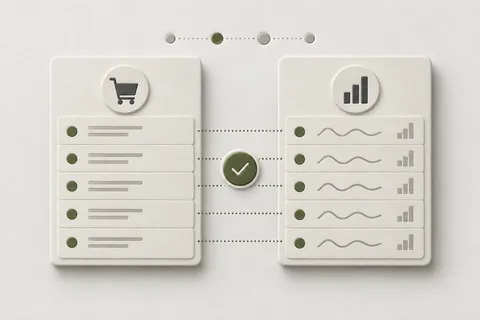
Proposed measurement stages in the audit
- Before
- No complete SaaS event structure visible
- After
- 7 stages defined, implementation proposed
SaaS scheduling platformClient work
I audited a scheduling platform and proposed a seven-stage measurement funnel, from acquisition to activation and subscription.
The brief
A scheduling platform could see visits, but its setup did not appear to distinguish visitors from businesses that registered and used the product. I audited the measurement against its SaaS model.
The investigation
The audit found mostly basic Meta page tracking and apparent PostHog self-referrals. Google conversion coverage was unclear.
Client-side navigation and analytics delayed until consent appeared to put route and first-source recording at risk. Those findings needed validation before a fix.
I separated acquisition, intent, lead, signup, business setup, activation and revenue. Trial or subscription events were conditional on the actual payment flow.
Before → after
Client work Done for real clients. Client details are anonymised.
The audit defined seven measurement stages and separated an immediate tracking correction from conversion tagging and a fuller product-measurement build.
That was the delivered result: a diagnosis and scoped options. It does not establish that events were implemented, attribution recovered or revenue increased.
Proposed measurement stages in the audit

A note from Daniilbefore you decide
I need to distinguish account creation from meaningful product use before choosing conversion goals. A page visit alone cannot tell a SaaS team which acquisition source brings activated customers.
— Daniil
An audit of a Spain-based coaching funnel separated an underperforming ad from a working Lead signal. I then built a client-owned Calendly-to-Meta server route.

The first answer is free, within one working day. Or write directly: next@taskfordaniel.com